A cornerstone of any successful strategy is Search Engine Optimization (SEO)—the practice of improving your website to increase its visibility in search engines like Google.
While many business owners focus on broad, competitive keywords (like "restaurant" or "construction company"), a more powerful and often overlooked opportunity lies in the "long-tail effect."
Here we’ll demystify this concept, explain why it’s critical for your business success, and provide actionable, industry-specific steps to harness its power.
What is the Long-Tail Effect in SEO?
In simple terms, the long-tail effect refers to the collective power of specific, often longer, and less common search queries.
The concept of the long-tail effect originates from statistics and market analysis, where it describes a phenomenon in which a large number of unique items (in this case, niche search queries) each gain small amounts of traffic, but collectively outpace the few high-traffic “head” keywords.
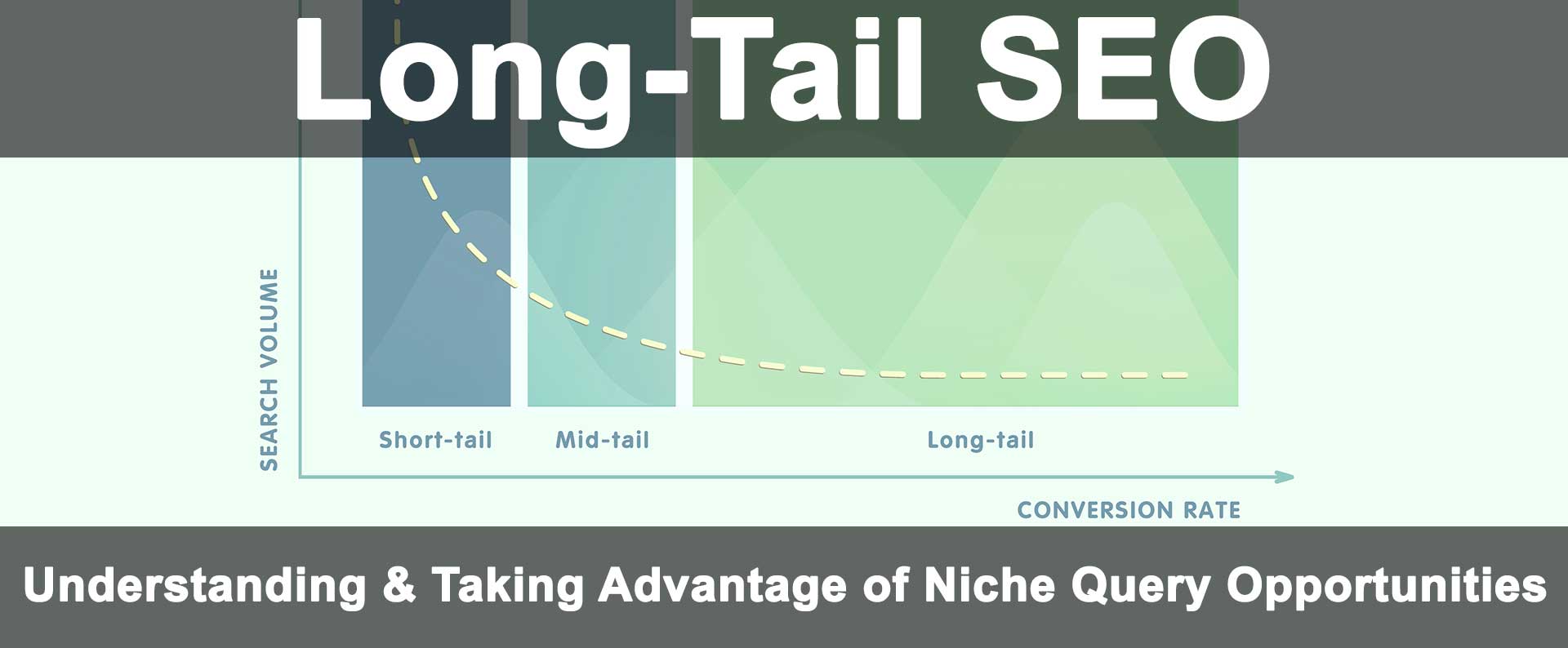
Imagine a graph where the head (left side) represents a few, hugely popular search terms with high competition.
The long tail (stretching to the right) represents the vast number of unique, lower-volume, but highly specific searches.
Head terms: short, high-volume keywords (e.g., “restaurant”).
Long-tail keywords: longer, more specific phrases (e.g., “family-friendly Italian restaurant open late in downtown Providence”).
Why it matters: long-tail queries are more likely to match precise intent (research, local visit, purchase), have lower competition and CPC (pay-per-click) costs, and convert at higher rates.
While individual long-tail phrases might get fewer searches per month, their cumulative volume is enormous, often surpassing the head terms.
More importantly, they signal high user intent. Someone typing a long, specific phrase is often further down the buying funnel, actively researching a solution, and much more likely to convert into a customer.
Why the Long-Tail Effect Matters for Your Business Strategy
Ignoring the long-tail means competing in the noisiest, most expensive arena while ignoring a goldmine of qualified traffic. Here’s why it’s a strategic imperative:
- Lower Competition & Higher Attainability:
It’s easier to rank on page one of Google for a specific long-tail phrase than for a generic head term. This is a feasible SEO win for any business.
- Higher Conversion Rates:
Traffic from long-tail searches is highly targeted. Visitors are looking for exactly what you offer, leading to more leads, calls, and sales.
- Foundation for Authority & Improved Relevance:
Creating content around long-tail topics establishes your website as a detailed resource, building trust and authority with both users and search engines.
- Reinforces All Marketing Channels:
Content created for long-tail SEO can be repurposed into blog posts, social media content, email newsletters, and even print materials, making your entire marketing ecosystem more cohesive and informed.
Implementing the Long-Tail Strategy: A Step-by-Step Guide
Step 1: Discover Your Long-Tail Keywords
- Brainstorm:
- List every question your customers ask, every specific service or product variant you offer, and every problem you solve.
- Consider questions and phrases that customers frequently ask about your niche services.
- Segment by informational (how-to), commercial (compare), transactional (buy/appointment), and local intent.
- Use Free Tools:
- Google's "People also ask" and "Related searches" at the bottom of the search page are treasure troves.
- Tools like Google Keyword Planner (free with an ad account) can provide search volume data.
- Use tools like SEMrush, or Ahrefs to identify long-tail keywords relevant to your business.
- Analyze Your Analytics:
- Check your current website data to see what specific phrases are already bringing people to your site.
- Analyze current search queries using Google Analytics or Search Console to unearth niche variations that visitors are already using.
- Analyze Competitor's Long Tail:
- See what specific queries your competitors are ranking for that you aren't.
Step 2: Create Targeted, Helpful Content
For each key long-tail phrase, create a dedicated page or blog post that thoroughly answers the query. Use the keyword naturally in the page title, headings, and body. The content must be genuinely useful, not just a keyword placeholder.
- Content Mapping & Clustering:
- Create content clusters: a pillar page for broad topics + supporting pages targeting long-tail variants and specific questions.
- Use FAQs, blog posts, localized landing pages, and product detail pages to target many long-tail terms.
- On-page Optimization:
- Use long-tail phrases in title tags, H1s, meta descriptions, and body copy naturally.
- Add structured data/schema (LocalBusiness, Product, FAQ) to improve SERP appearance and voice-search readiness.
Step 3: Structure Your Website for Clarity
Ensure your website's navigation and internal linking make it easy for users and search engines to find this deep, specific content. A well-organized site helps distribute authority and improves the visibility of all your pages.
- Technical & UX Considerations:
- Fast page speed, mobile-first design, clear CTAs, and canonicalization for similar pages to avoid dilution.
- Internal linking that routes authority from pillar pages to long-tail pages.
- Content Cadence & Inventory:
- Publish consistently: focus on evergreen and problem-solving content that directly answers narrow queries.
- For retailers, ensure product variants (sizes, colors, local pickup) have crawlable pages or variant schema.
Step 4: Monitoring & Adjustment
- Track the performance of your long-tail content using integrated funneling tools to analyze conversion paths.
- Utilize A/B testing on landing pages to identify which long-tail phrases lead to better engagement and sales.
- Adjust your strategy based on conversion rates and emerging search trends.
Industry Playbooks & Actionable Steps
Retail (e-Commerce, Kiosks, Pop-ups):
Actionable Steps:
- Product Descriptions: Instead of generic descriptions, use long-tail keywords like "eco-friendly yoga mats" or "handmade leather wallets."
- Blog Content: Write articles such as "Top 10 Eco-Friendly Products for Sustainable Living" to attract niche audiences.
Benefit:
Retailers can capture specific consumer interests and improve conversion rates by targeting what buyers are actively searching for.
Example Long-Tail:
- “vegan leather Chelsea boots size 8 women’s”
- "waterproof hiking backpack under $150”
Action Plan:
- Product titles = head term + model + use case (“women’s waterproof trail-running shoes”).
- Mine user-generated content (UGC) and reviews—each review adds natural long-tail phrases that Google can index [2] (https://www.yotpo.com/blog/long-tail-keywords-guide/).
- Create comparison guides (“synthetic vs natural down jackets for alpine climbing”) targeting question-based queries.
- Sync paid search: bid on profitable long-tail phrases first; cost-per-click is far lower.
Restaurants (Cafes, Diners, Food Carts):
Actionable Steps:
- Menu Optimization: Instead of just listing "pizza," use phrases like "vegan gluten-free pizza in [Location]."
- Local SEO: Create blog posts about local ingredients, seasonal dishes, or specific dietary options.
Benefit:
By catering to specific dietary needs or local preferences, restaurants can attract a dedicated customer base.
Example Long-Tail:
- “family pizza place with patio in Downers Grove”
- "best gluten-free brunch near Broadway Nashville”
Action Plan:
- Build a keyword map per location covering cuisine, experience, and occasion keywords [4] (https://thedigitalrestaurant.com/restaurant-keyword-research-guide/).
- Craft local landing pages with hours, menus, reservation links, and embedded FAQs to capture voice queries (“Do you have outdoor seating?”) [5] (https://merchants.doordash.com/en-us/blog/restaurant-seo-2026).
- Publish event-driven blogs (“Where to eat before a show at Ryman Auditorium”) to win peripheral searches.
- Add schema for Menu and FAQ to gain rich snippets and zero-click visibility.
Hospitality (Hotels, B&Bs):
Actionable Steps:
- Targeted Packages: Promote packages using long-tail keywords such as "family-friendly hotels with free breakfast in [Location]."
- Guest Experience Blogs: Share tips on local attractions with articles like "Best Kid-Friendly Attractions near [Hotel Name]."
Benefit:
Hotels can stand out by emphasizing unique aspects of their offerings, appealing to specific traveler demographics.
Example Long-Tail:
- “pet-friendly boutique hotel near Asheville trails”
- "wedding venue with on-site catering and lake view Oregon”
Action Plan:
- Group keywords by traveller persona—families vs hikers vs couples—and dedicate landing pages to each.
- Optimise Google Business Profile with amenity keywords (“heated pool,” “EV charging”) to appear in map packs.
- Embed testimonial snippets that mention niche amenities; they reinforce user intent and improve E-E-A-T.
- Partner with local attractions for co-created content (“3-day craft-brew itinerary”) and reciprocal links.
Construction (Contractors, Trades):
Actionable Steps:
- Service Descriptions: Use long-tail keywords like "affordable green building services in [Location]."
- Educational Content: Publish guides on topics like "How to Choose the Right Contractor for Your Home Renovation."
Benefit:
Construction companies can attract clients seeking specific services or expertise, enhancing their credibility.
Example Long-Tail:
- “affordable kitchen remodel contractor in Austin”
- "24/7 emergency plumber near me open now”
Action Plan:
- Combine service + city + urgency for transactional intent; these drive the majority of calls [6] (https://anypost.ai/blog/how-general-contractors-can-dominate-local-seo-in-2026).
- Create separate pages for each city served; include project photos, permits handled, and neighbourhood references.
- Optimise for voice: write content in Q&A format (“How fast can you replace a water heater in Phoenix?”).
- Encourage satisfied clients to leave geo-tagged photo reviews—powerful trust and local signals.
Healthcare (Clinics, Therapists, Dentists):
Actionable Steps:
- Patient Education: Create informative articles using long-tail keywords like "symptoms of seasonal allergies in children."
- Service Pages: Develop pages for specific services like "pediatric urgent care in [Location]."
Benefit:
Healthcare providers can build trust and authority by addressing specific patient concerns, leading to increased patient engagement.
Example Long-Tail:
- “pediatrician accepting new patients open Saturday Boston”
- "non-surgical varicose vein treatment near me”
Action Plan:
- Segment keywords by patient journey stages (symptom, treatment, book appointment) [7] (https://wiserank.co.uk/healthcare-seo-trends-2026-for-hospitals-clinics/).
- Use FAQ schema to answer voice searches (“What does a sports medicine doctor do?”).
- Create medically reviewed service pages with plain-language explanations; compliance boosts trust and rankings.
- Highlight insurance networks and telehealth availability—common decision criteria reflected in long-tail searches.
Professional Services (Legal, Accounting, Consulting):
Actionable Steps:
- Niche Services: Use long-tail keywords such as "tax preparation for freelancers" or "small business legal advice in [Location]."
- Informative Webinars: Host webinars or write articles addressing specific issues like "Navigating Tax Laws for Small Businesses."
Benefit:
Professionals can differentiate themselves by showcasing their expertise in niche areas, attracting clients who require specialized knowledge.
Example Long-Tail:
- “car accident lawyer near me free consultation Spanish speaking”
- "small business tax preparation accountant in Denver”
Action Plan:
- Build practice-area clusters: one pillar page (“Personal Injury Law”) supported by articles answering niche questions (“What is comparative negligence in Texas?”) [8] (https://internationaloutsourcinggroup.com/blog/seo-keywords-law-firms/).
- Embrace modifiers like “no win no fee,” “remote,” or “24-hour” that signal immediate hiring intent.
- Add city-specific landing pages with attorney bios, case results, and video FAQs to improve E-E-A-T.
- For accountants, target fiscal-year triggers (“quarterly payroll tax filing service Q2 2026”) and industry verticals (“accountant for SaaS startups”) [9] (https://loganix.com/seo-for-accountants/).
How a Business Owner Can Take Advantage
For small and medium business owners, embracing the long-tail effect is a strategic imperative:
- Customer-Centric Content:
Think about the exact questions your ideal customer asks. What problems are they trying to solve? What specific products or services are they looking for?
- Content Audits:
Review your existing website content. Are there opportunities to expand or create new pages around specific long-tail themes?
- Local Optimization:
For brick-and-mortar businesses, combining long-tail keywords with local identifiers is extremely powerful.
- Listen to Your Customers:
Pay attention to common questions asked via email, phone, or in-person. These are goldmines for long-tail keyword ideas.
- Utilize Google Business Profile:
Optimize your Google Business Profile with descriptive, long-tail information about your services and products.
Other Potential Benefits
Beyond the immediate SEO and conversion advantages, the long-tail effect offers broader strategic benefits:
- Diversified Traffic Sources:
Relying on a vast array of long-tail keywords diversifies your organic search traffic, making your website less vulnerable to algorithm changes that might impact a few high-volume terms.
- Discovery of New Niches:
As you delve into long-tail research, you may uncover underserved niches or emerging trends that your business can capitalize on. This can lead to new product development or service offerings.
- Enhanced User Experience:
By creating highly relevant content that directly answers specific user queries, you improve the overall user experience on your site, leading to longer dwell times and lower bounce rates, which search engines favor.
- Voice Search Optimization:
Voice searches are inherently more conversational and often comprise long-tail queries (e.g., "Siri, where can I find a vegan restaurant near me that serves late-night desserts?"). Optimizing for long-tail naturally prepares your content for the growing voice search trend.
Integrating into a Broader Marketing Strategy
The long-tail effect is not a standalone tactic but a powerful reinforcement tool for existing traditional and digital marketing channels.
- Content Marketing Synergy:
Long-tail keywords provide the perfect framework for a robust content marketing strategy. Blog posts, articles, videos, and infographics answering specific queries can then be promoted through social media, email newsletters, and even referenced in traditional print materials.
- Social Media Engagement:
Long-tail insights can inform social media content. If you discover a long-tail query about "best practices for managing construction project risks," you can create a series of social media posts, polls, or live Q&A sessions around that topic, linking back to your in-depth article.
- Email Marketing Segmentation:
Understanding the specific interests (often revealed by long-tail searches) of your subscribers allows for highly segmented and personalized email campaigns, increasing engagement and conversion rates.
- Traditional Marketing Support:
A print ad for a "new healthcare clinic" can direct people to your website, where carefully crafted long-tail content (e.g., "what to expect during your first physical therapy session for back pain") ensures they find exactly what they need.
- Paid Ad Campaigns (PPC):
As mentioned, using long-tail keywords in Google Ads drastically improves campaign efficiency. These campaigns can be used to test new long-tail keywords before investing heavily in organic content for them.
Tracking Outcomes: Integrating with Your Marketing Funnel
The long-tail strategy must be measured. Implement integrated funneling:
- Track Clicks & Rankings:
Use Google Search Console to see which long-tail phrases bring impressions and clicks.
- Measure On-Site Behavior:
Use Google Analytics to see if visitors from these pages spend more time on site and view more pages.
- Track Conversions:
Set up goals to track when these visitors fill out a contact form, call via a tracked number, or book an appointment online. This directly ties your SEO efforts to lead generation and revenue.
- Refine & Expand:
Use this data to identify your most effective long-tail topics and create more content in that vein.
Wrapping It Up: A Powerful Ally for the Modern Business
The long-tail effect is not a trick; it’s a fundamental shift in strategy from shouting broadly to speaking directly. By meticulously answering the specific questions your potential customers are asking online, you do more than improve SEO. You build authority, pre-qualify your leads, and create a website that works as a 24/7 sales and service tool.
In a competitive landscape, this targeted, resource-rich approach is what separates thriving businesses from those simply maintaining an online presence. It’s about being found for the right reasons by the right people at the exact moment they are ready to engage.